All work

4 min read

ImmoScout24 · 2022

Boosting a listing, without leaving the platform.

Bringing Demand Boost – a paid option that brings more leads to property listings – onto ImmoScout24, instead of a separate site with its own login.

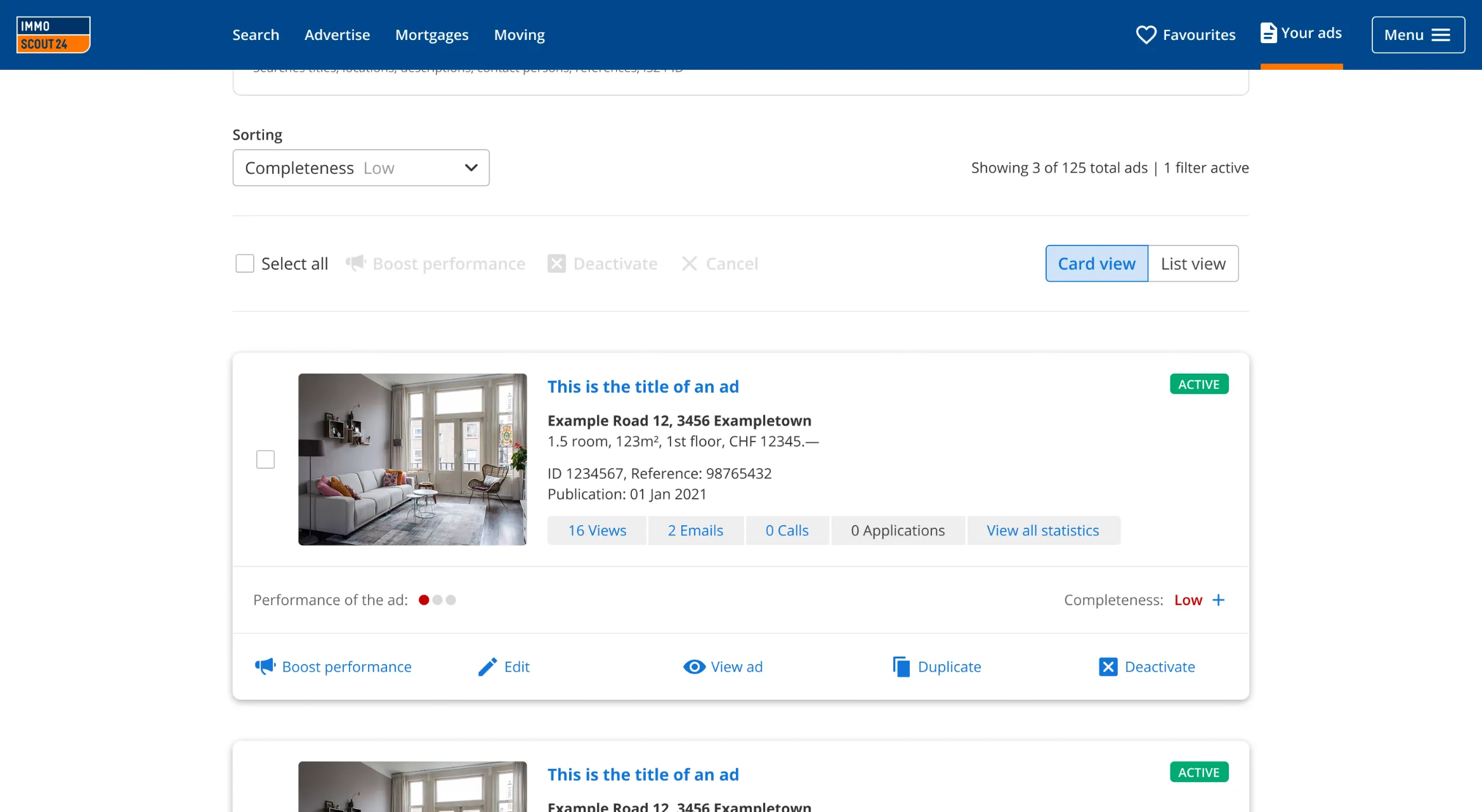
Enlarge image: The Your ads page on ImmoScout24 in card view. An ad card shows the listing photo, address, views, emails and calls, a performance indicator with one of three dots in red, and a Boost performance action next to Edit, View ad, Duplicate and Deactivate.
Ad performance indicator and option to “Boost performance”.

At a glance

Demand Boost originally launched in 2019 as a paid option for advertisers on ImmoScout24. In order to get more leads, they pay to promote a listing through social media and other channels. A third-party provider creates those campaigns automatically.

Booking and managing it, though, happened outside ImmoScout24, on the provider’s site with a separate account. As part of a larger initiative, I designed a booking process inside the platform itself. Only a few screens, but with direct revenue impact.

Client
ImmoScout24 Schweiz
Industry
Swiss real estate marketplace
My role
Product Designer
Year
2022
Platform
Web, iOS, Android
Tools
Figma, Illustrator
Deliverables
User journey, wireframes, prototype, UI design, microcopy

The challenge

A paid feature with too many obstacles.

For a feature that advertisers have to pay extra for, every step between deciding and booking costs something. Leaving ImmoScout24, logging in to another account and finding their way around a different interface was a journey only a few were willing to take.

It also created an unnecessary split: the listing lived on ImmoScout24, the boost campaign somewhere else. The goal was a smoother booking experience that works without leaving the platform.

Approach

Bring it home, keep it short.

Mapping the journey.

I started by mapping the existing journey from listing to booked campaign across both platforms, to see where advertisers had to switch context and what the new flow could leave out. From there I moved to wireframes and a clickable prototype to review with the team.
Three simple steps.

The booking now happens entirely on ImmoScout24, with a simple wizard using the same account advertisers are already logged in with.

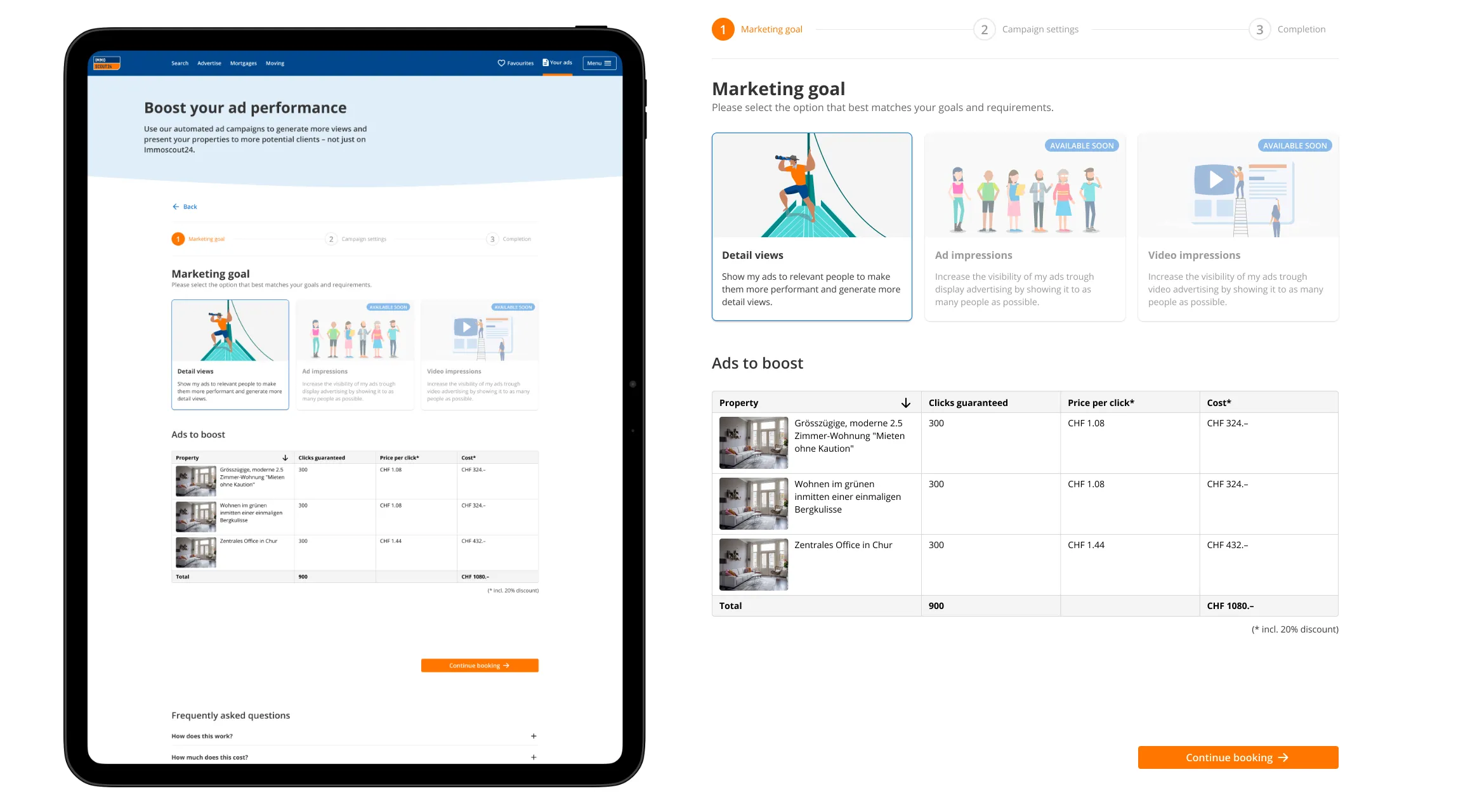
Enlarge image: Step 1, Marketing goal, on a tablet and enlarged beside it. Three goal cards – Detail views is selected, Ad impressions and Video impressions are marked Available soon – above a table of the ads to boost, with guaranteed clicks, price per click and cost for each, and a Continue booking button.
Demand Boost booking: step 1 – choosing the right option.
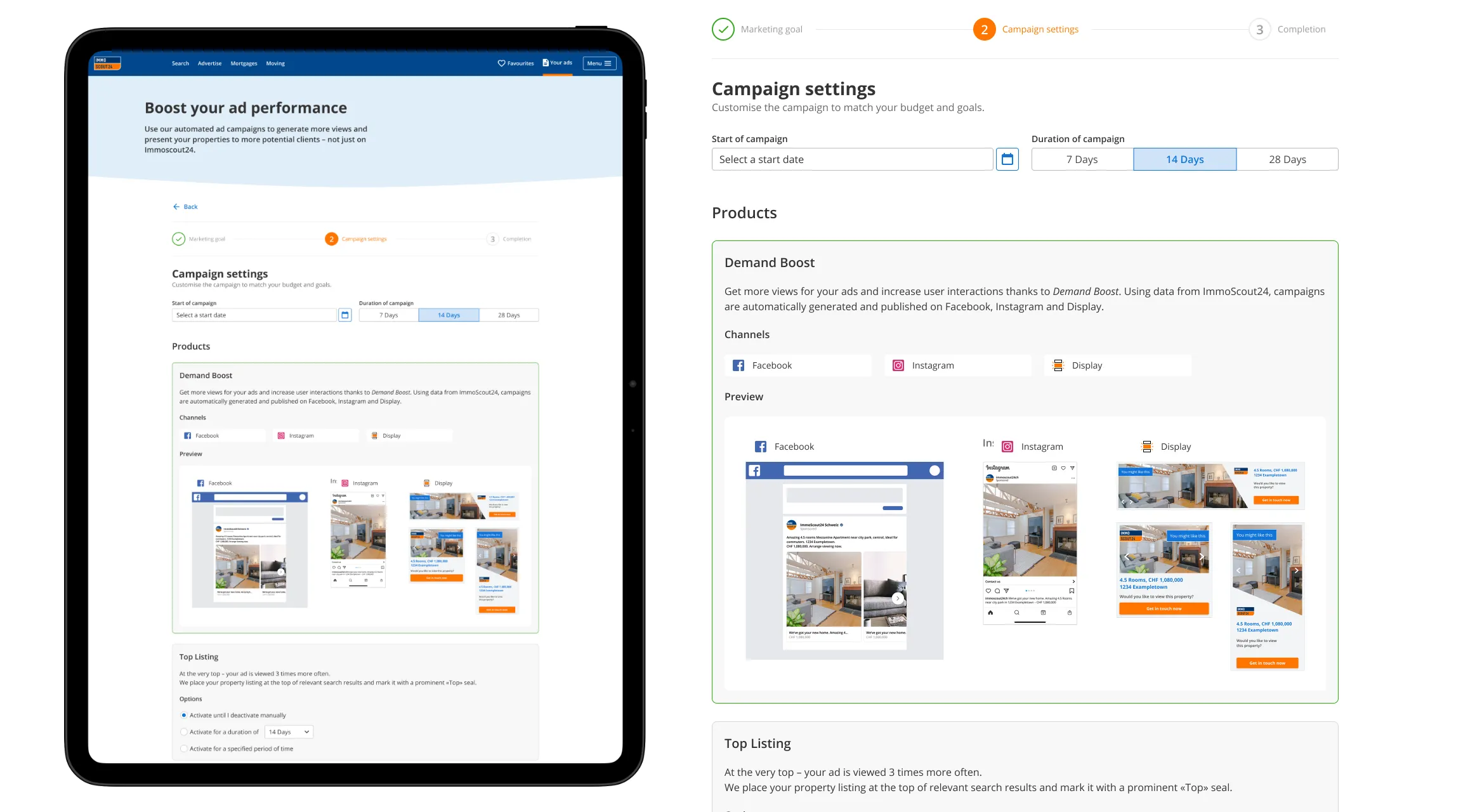
Enlarge image: Step 2, Campaign settings, on a tablet and enlarged beside it: a start date, a choice of 7, 14 or 28 days, and the Demand Boost product with its channels Facebook, Instagram and Display and a preview of the ad on each. A Top Listing option follows below.
Demand Boost booking: step 2 – details and preview.

From booking to campaign.

Once the booking is done, the third-party provider takes over and creates the campaign automatically. There’s nothing else for the advertiser to set up.

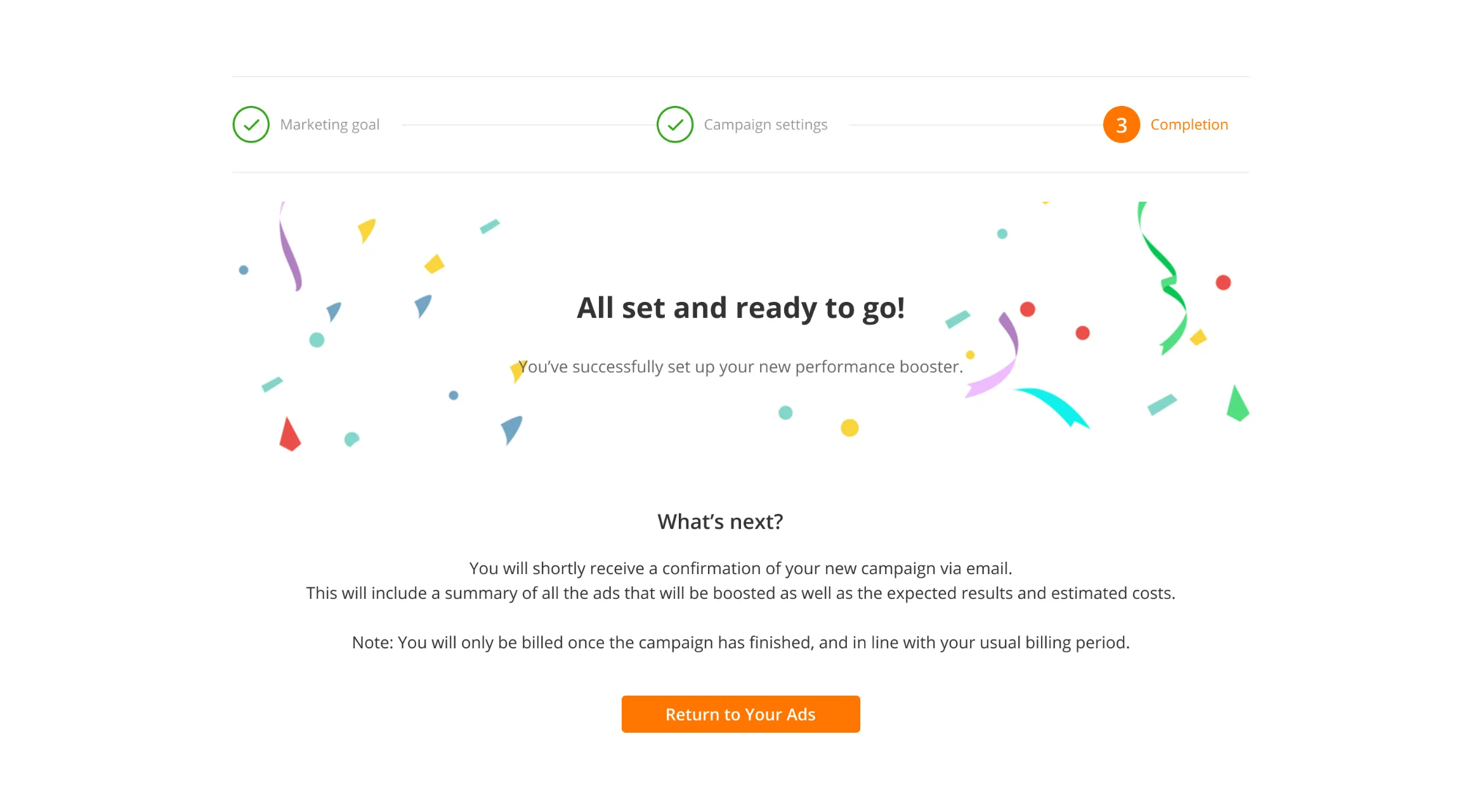
Enlarge image: Step 3, Completion: confetti around the heading “All set and ready to go!”, a What’s next section about the confirmation email and billing, and a Return to Your Ads button.
Demand Boost booking: step 3 – celebrating success.
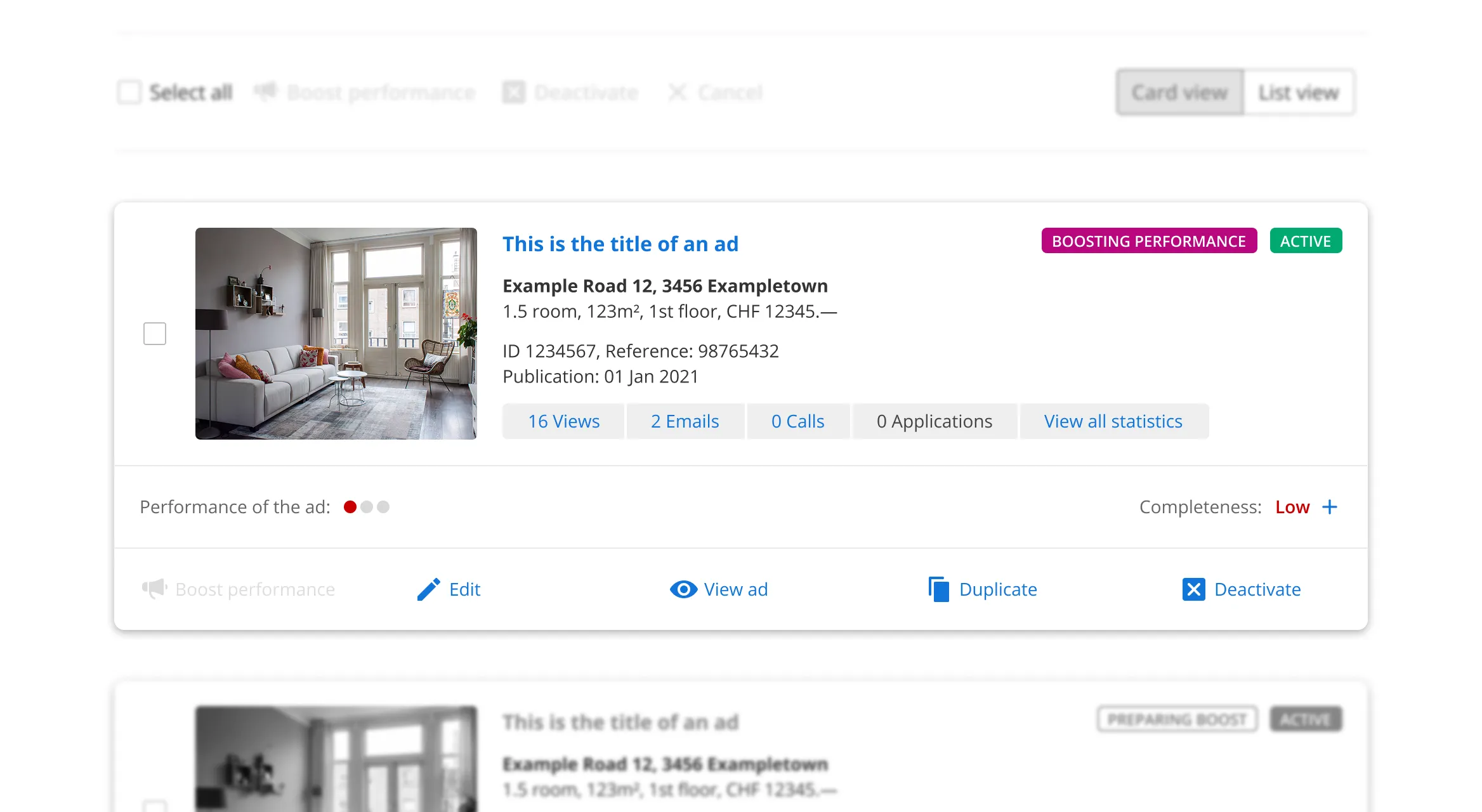
Enlarge image: The ad card in the listing overview, now with a pink Boosting performance label next to Active and the Boost performance action greyed out. A second, blurred card below is marked Preparing boost.
Ad marked with “Boosting Performance” in the listing overview.

Result

One platform, one login.

Advertisers can now book Demand Boost without leaving ImmoScout24 or creating a separate account. A paid feature that used to sit behind a detour is now part of the place where they manage their listings.

Looking back

What I’d do differently.

I based the booking flow on research with advertisers that had been done before I joined the project. It gave me a good starting point, but I only knew the findings, not the conversations behind them. Today I’d talk to a few advertisers myself, to understand what really makes them book a boost – and what holds them back. That question matters even more because of Listing Completeness, which launched around the same time and gave advertisers a free way to a better ranking. I’d love to know how the two played out side by side: did advertisers put in the work to improve their listings, or did they rather pay to skip it?

Contact

Let’s make it simple.

Open to freelance projects, full-time roles, and interesting conversations.

Visit me on LinkedIn