A score on every ad.
Each ad in the Your ads overview now shows a completeness score in one of four tiers. It’s readable at a glance, so advertisers with many listings can see straight away which ones need attention.
ImmoScout24 · 2021
Showing advertisers on ImmoScout24 how complete their listings are and why it matters for their ranking.
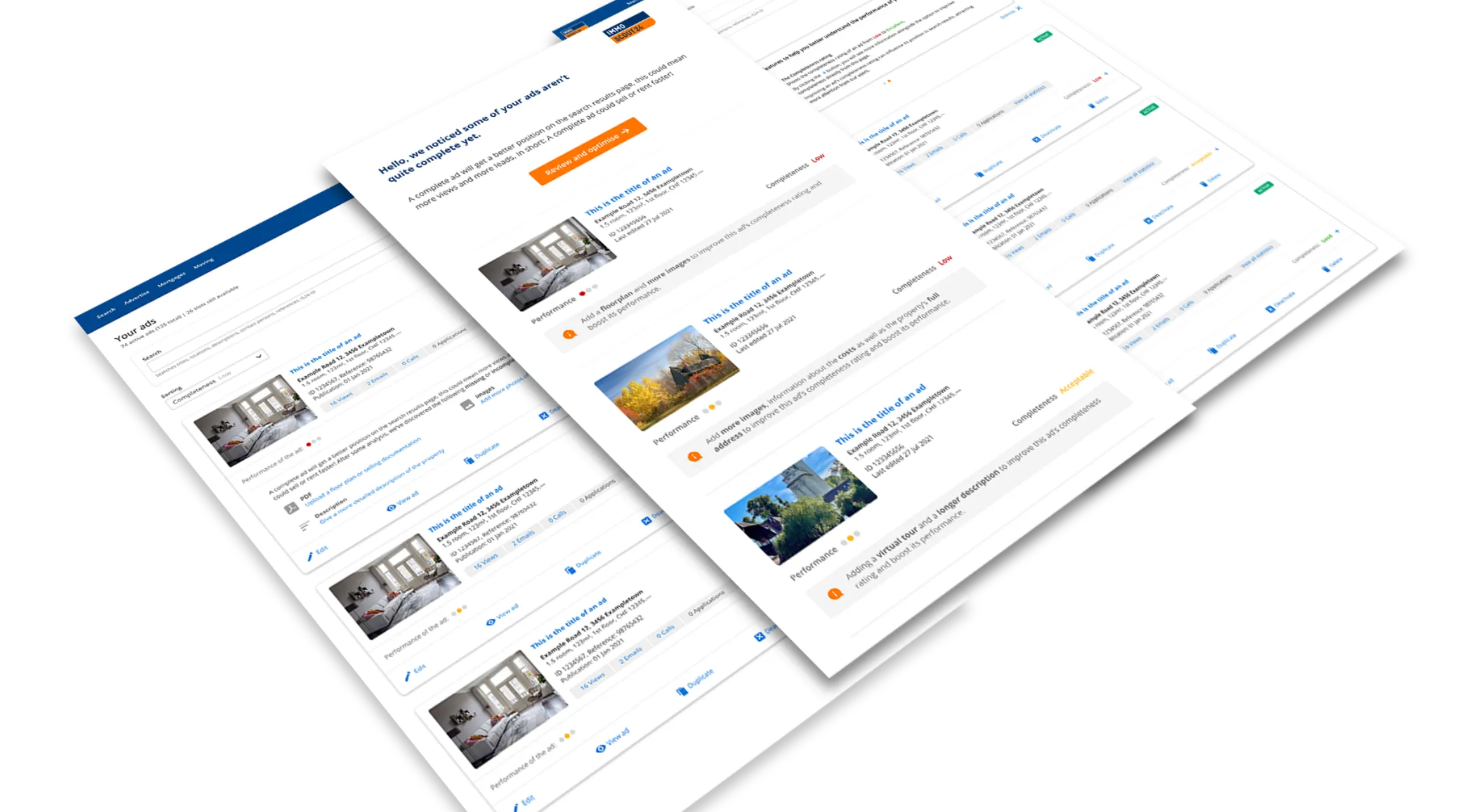
ImmoScout24 wanted to raise the overall quality of listings on the platform. Better listings help people looking for a home, and they perform better for the advertisers who publish them.
What advertisers – mostly letting agencies and property managers – didn’t know: how complete a listing is affects where it ranks in search results. Many believed the only way to more views was a paid add-on. I designed a completeness score for listings, so advertisers can see where they stand and decide for themselves whether to improve a listing for free or boost it with paid options. Interviews showed it also needed a nudge outside the product.
+15%
clicks on complete listings, confirmed in A/B tests
+25%
engagement on complete listings – saves, shares and enquiries
The challenge
Missing photos, a short description or no floor plan all cost a listing visibility. A/B tests had shown it clearly, but the platform never told advertisers. When an ad underperformed, the only option they saw was paying for more reach.
That was bad for everyone. Advertisers spent money on listings that could have done better on their own, and people searching for a home got thinner listings. The goal was to make the link between completeness and performance visible, and to make closing the gaps as easy as possible.
Approach
Each ad in the Your ads overview now shows a completeness score in one of four tiers. It’s readable at a glance, so advertisers with many listings can see straight away which ones need attention.
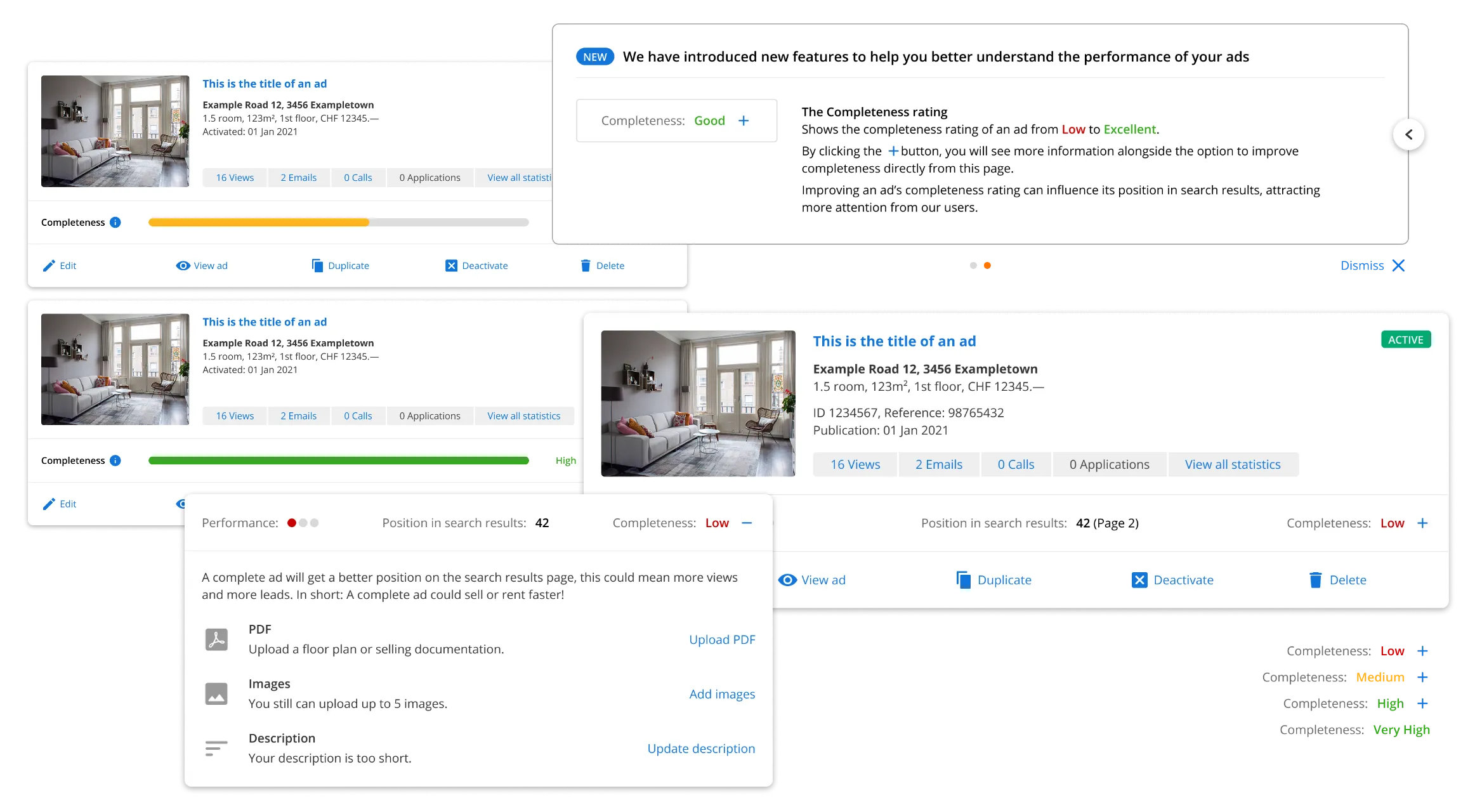
Expanding the score shows exactly what’s missing, such as photos, a description or a floor plan. Each item leads straight to the right place in the listing editor. Back in the overview, everything that’s been added has disappeared from the list, so the progress is visible right away, along with the updated score.
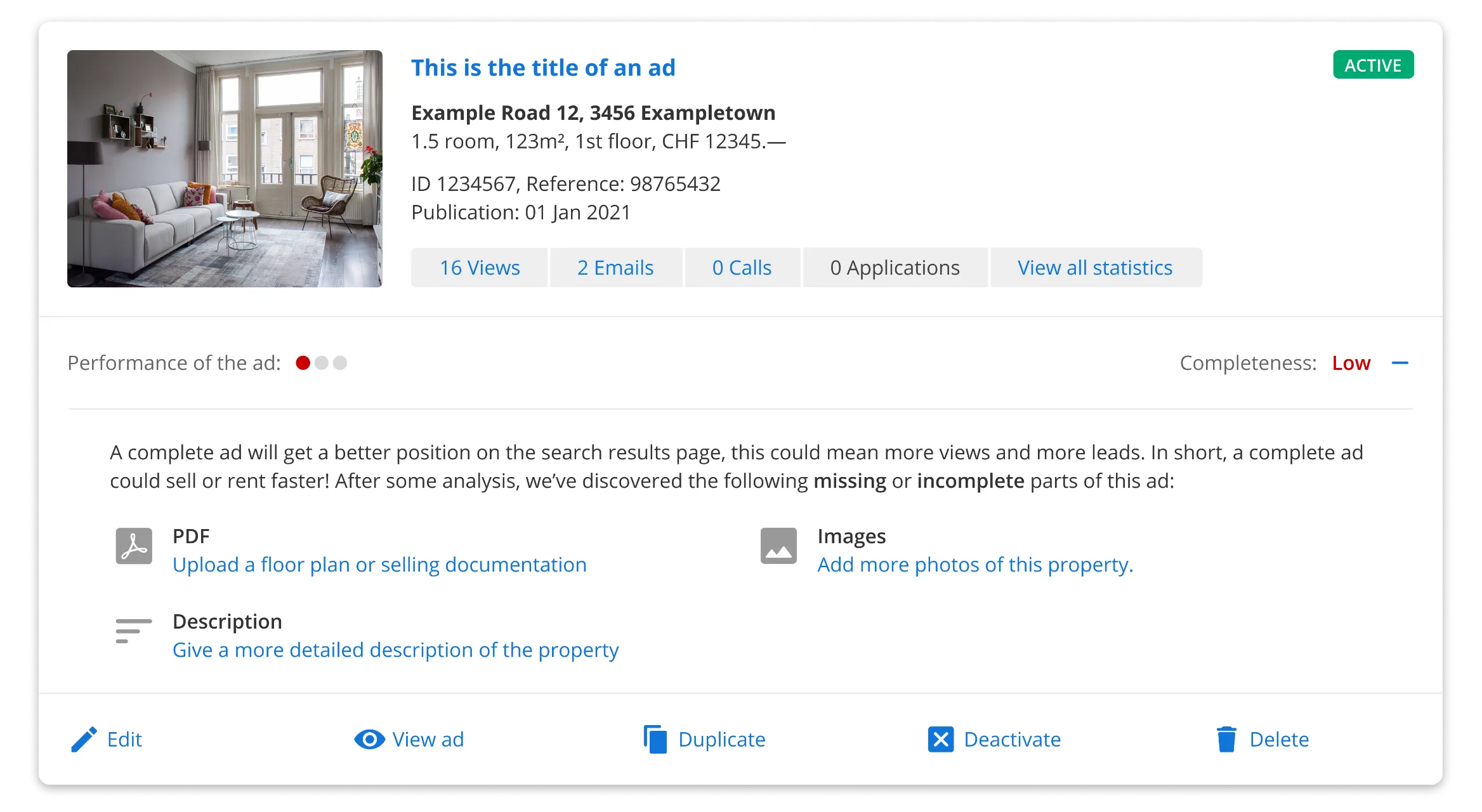
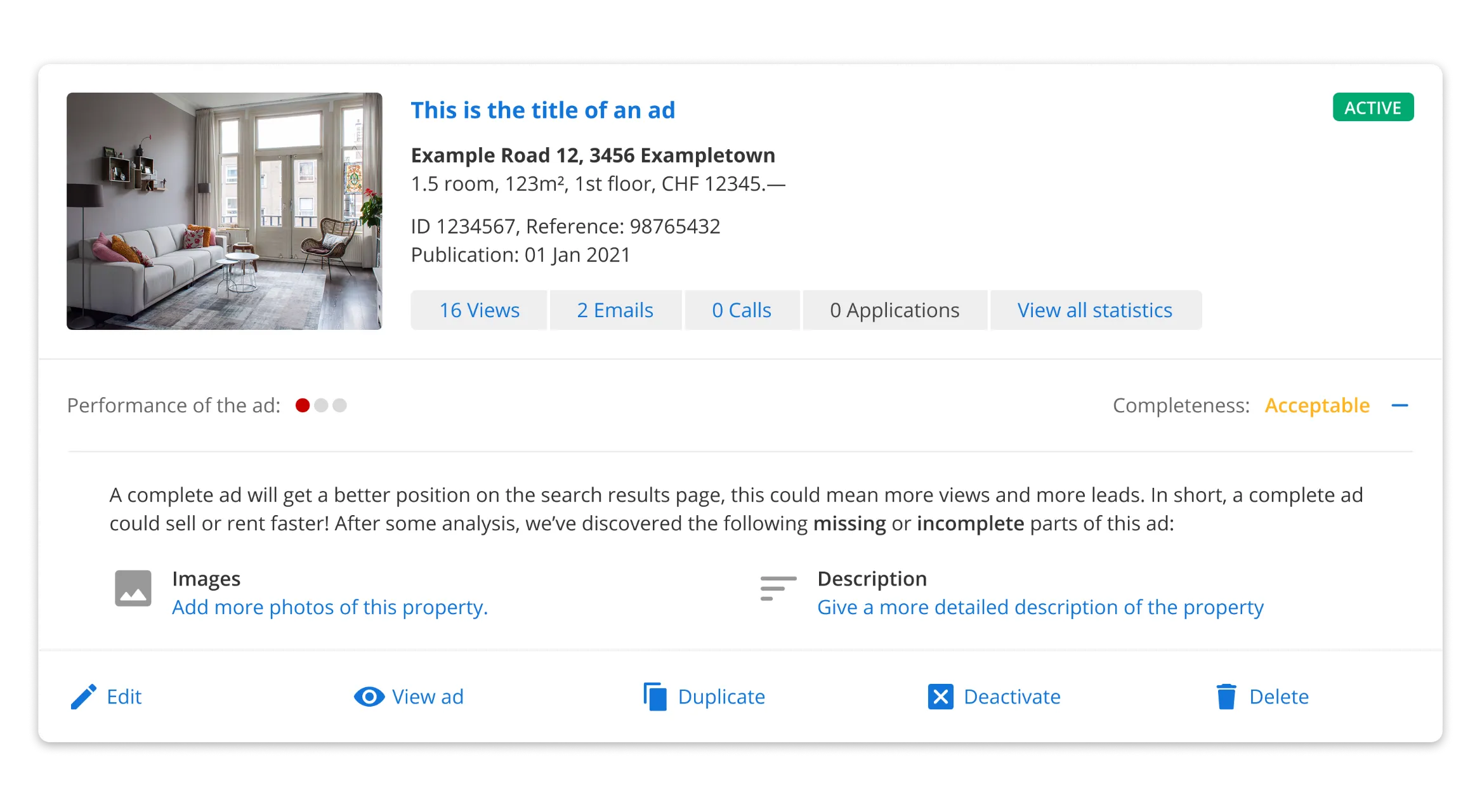
The score and checklist were clear and in the right place, yet hardly anyone acted on them. So I talked to large letting and property-management companies about how their work actually gets done.
A big part of the answer: the people who watch how listings perform usually aren’t the ones who create and manage them. The hints sat on a screen the right people rarely saw.
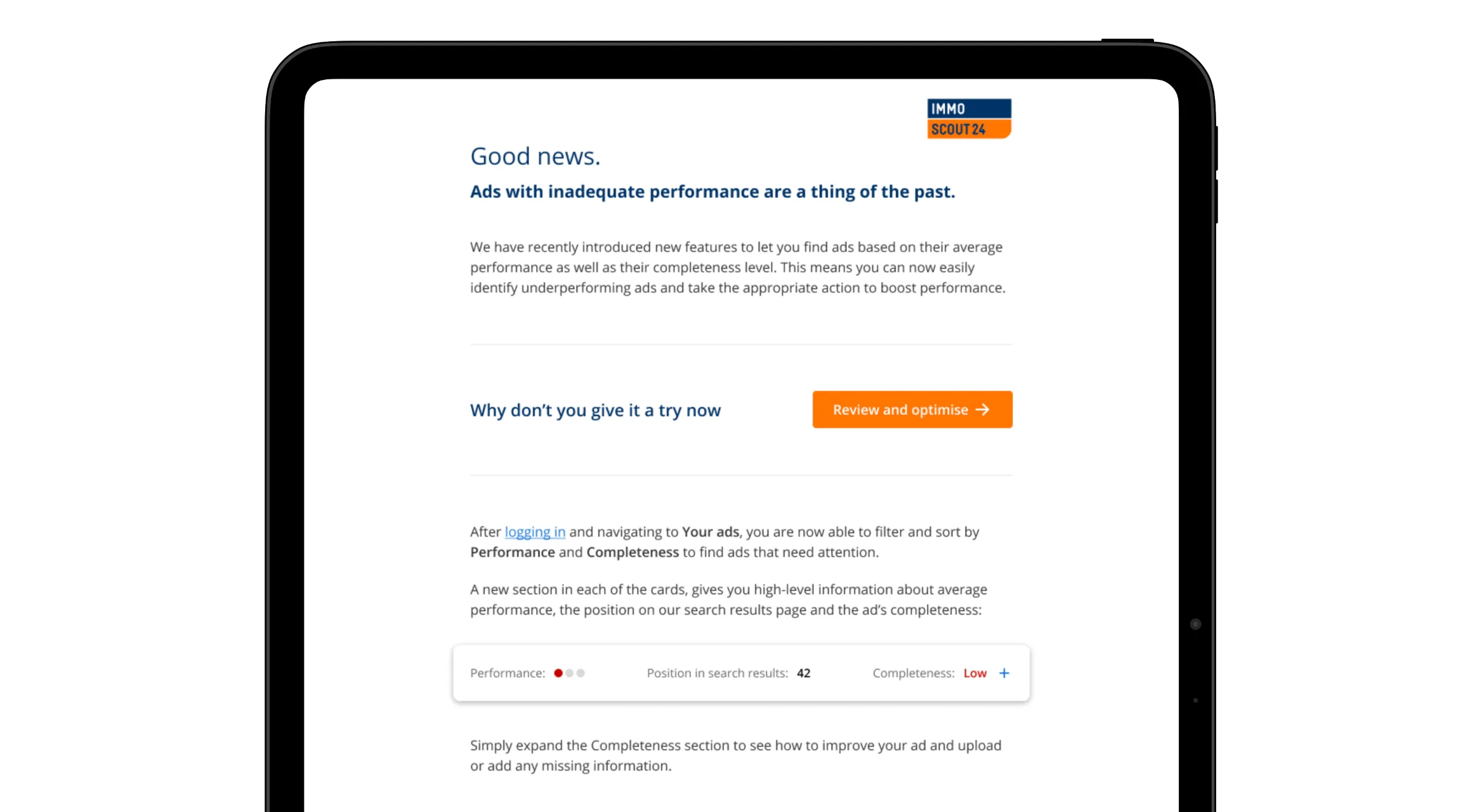
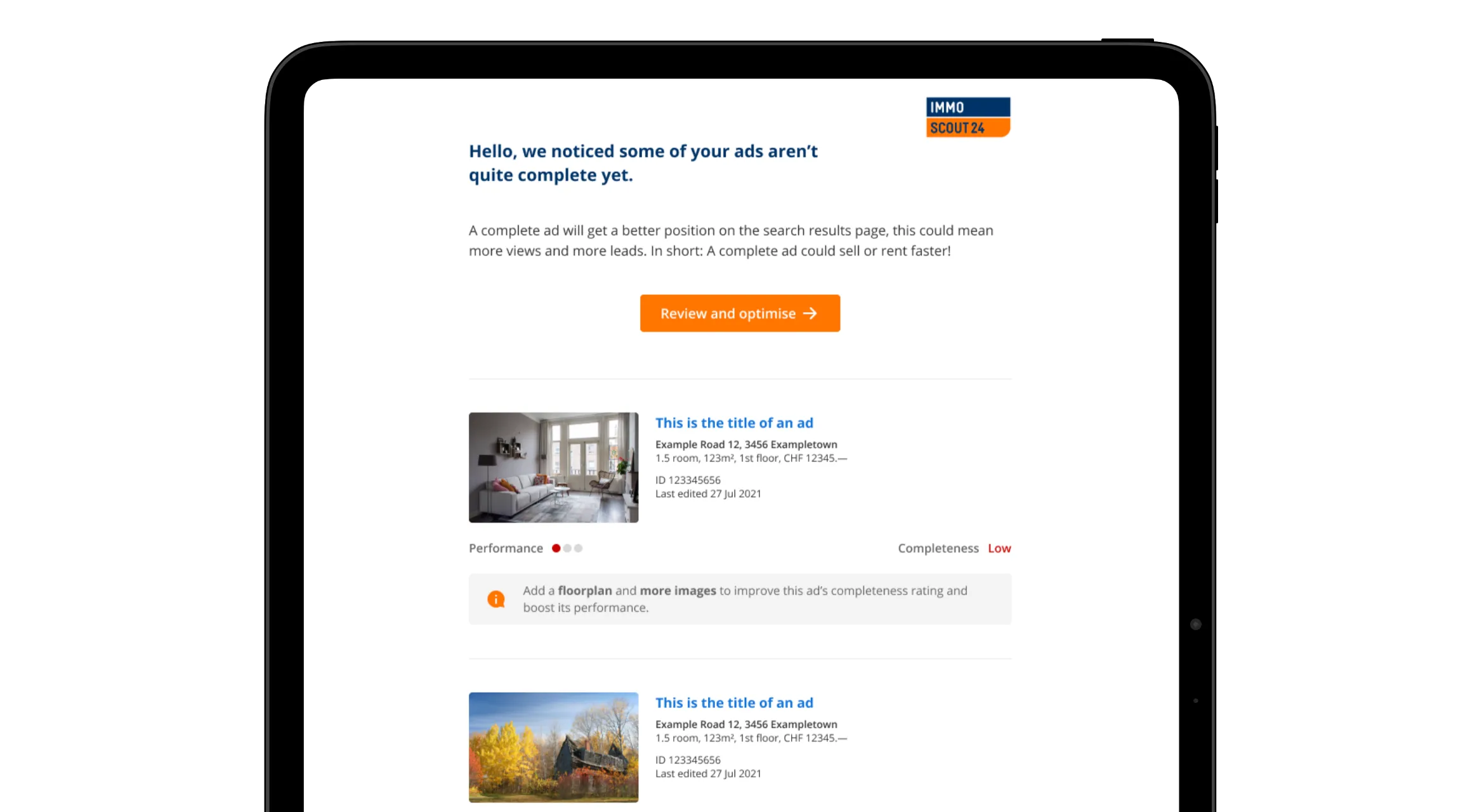
So the nudge moved out of the product. An info email introduced the new feature, and a regular status report names the listings that could perform better, what’s missing from each, and links straight to the right place to fix it. Whoever monitors performance can simply forward it to the colleague who has the missing floor plan or description.
Result
Advertisers can now see how complete their listings are, how this might affect their performance, and what to do about it – and the emails get that information to the people who can act on it. They have a real choice between improving a listing for free and paying for a boost. And the platform gets better listings for the people searching on it.
Looking back
The decisive touchpoint wasn’t in the interface at all. I only found that out by asking people how the work is actually done. Polishing the screen further would have been the more comfortable option, and it wouldn’t have changed a thing.
I heard the feature made a difference, but I left ImmoScout24 before I could compare it with the paid Demand Boost we introduced around the same time. Both answer the same need – more people seeing the ad. Did advertisers put in the work, or simply pay to skip it? Today I’d agree before launch on how to measure both side by side, so the answer wouldn’t depend on who’s still around to look.
Contact
Open to freelance projects, full-time roles, and interesting conversations.
hello@christianheynert.comVisit me on LinkedIn