All work

5 min read

OneLog · 2024–25

Two new products, one brand family.

Brand identities and Webflow websites for OneDSP and OneID – products under the OneLog umbrella that needed to stand on their own while still belonging to the family.

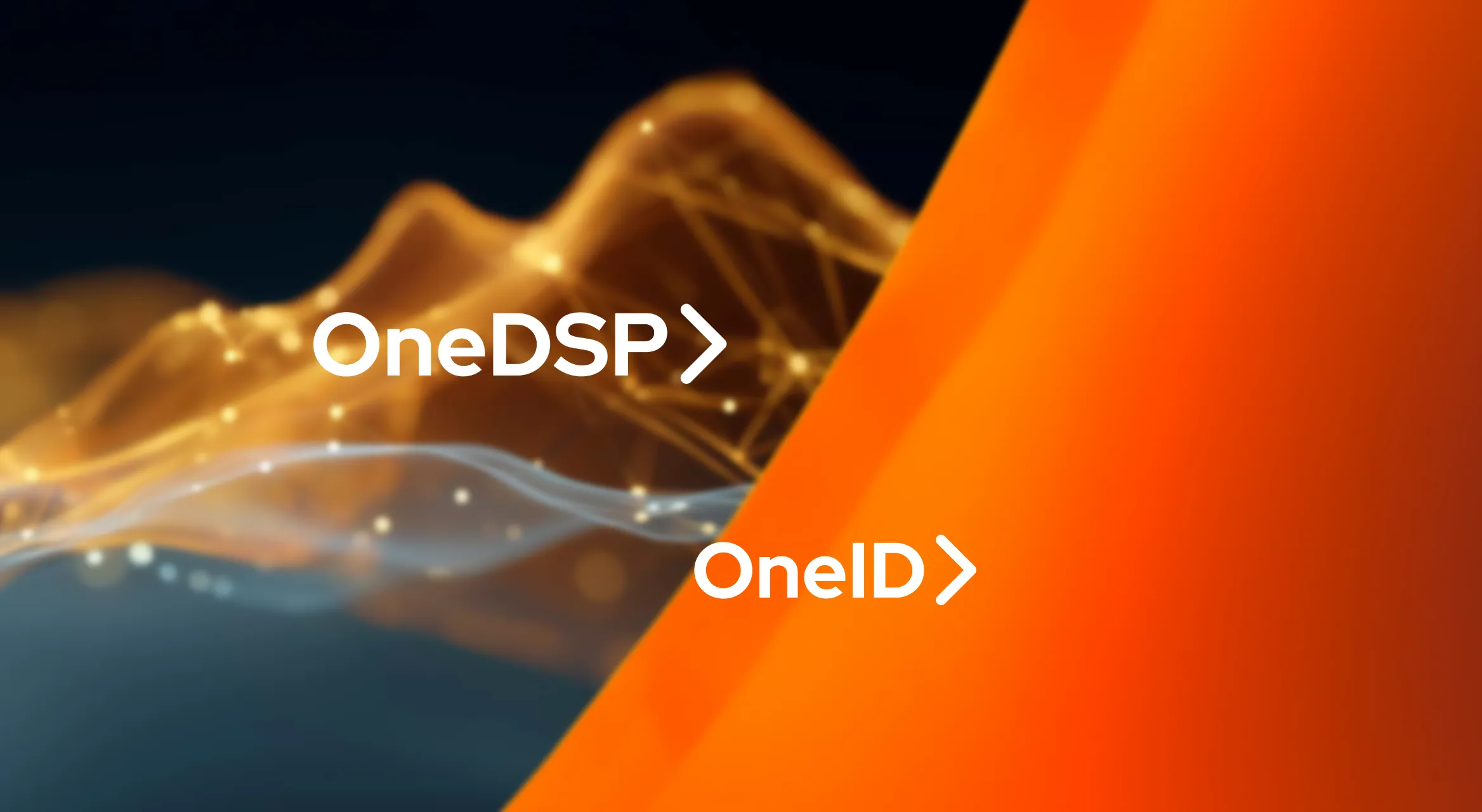
Enlarge image: The OneDSP and OneID logos in white, split by a diagonal line: OneDSP on a dark background with flowing golden light, OneID on a bright orange gradient.
Two brands, one family – OneDSP and OneID.

At a glance

OneLog was best known for its single sign-on. When the company started building products that had nothing to do with logging in, they couldn’t just look like OneLog or live as another page on the same website. Each one needed a brand and a marketing presence of its own, while still feeling clearly connected to OneLog.

I created both identities: OneID in 2024, the first of these products, and OneDSP in 2025. For each, that meant a logo, colour palette, a website built in Webflow, and templates for documents and presentations.

Client
OneLog AG
My role
UX/UI Design Lead
Duration
2024–25
Tools
Webflow, Photoshop, Illustrator, InDesign, Midjourney
Deliverables
Logos, colour palettes, websites with CMS, document and presentation templates, AI-generated imagery, social media graphics

The challenge

Separate, but part of the family.

Neither product had anything to do with single sign-on, so borrowing OneLog’s look would have sent the wrong message. But a completely new brand would have thrown away the trust OneLog had already built.

Each identity had to be distinct enough to stand on its own in its market, and close enough that people could see where it came from.

Approach

Shared foundation, own identity.

A brand of its own.

For OneDSP, I developed the full identity: logo, colour palette and templates for documents and presentations. To show the product before it had marketing screenshots of its own, I mocked up a OneDSP-branded Adform dashboard in Photoshop and used it on the website and in other marketing material.
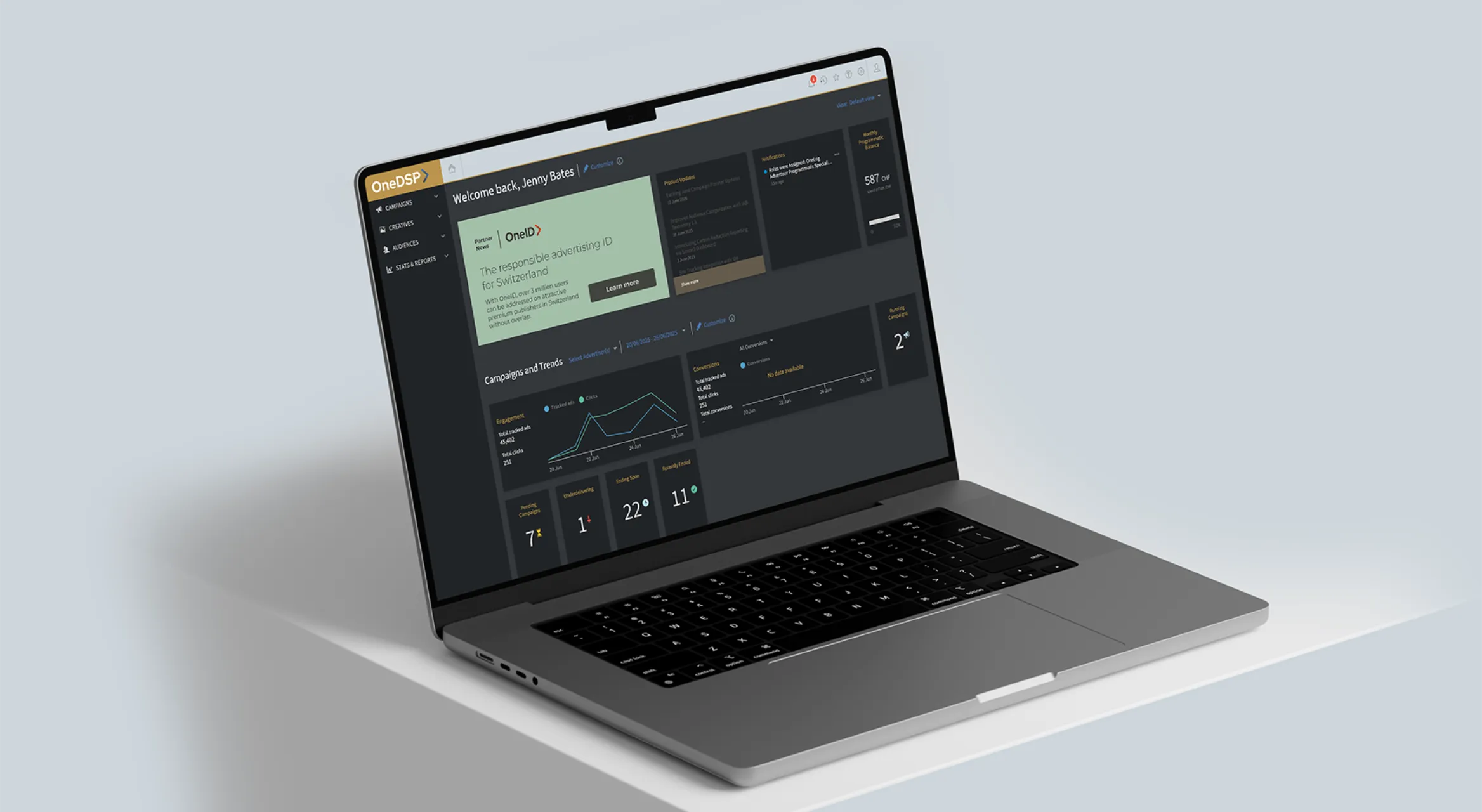
Enlarge image: A laptop showing an Adform dashboard restyled in the OneDSP brand: a dark interface with a gold OneDSP logo, a pale green OneID banner, campaign charts and counters.
OneDSP platform mockup.

The OneDSP website.

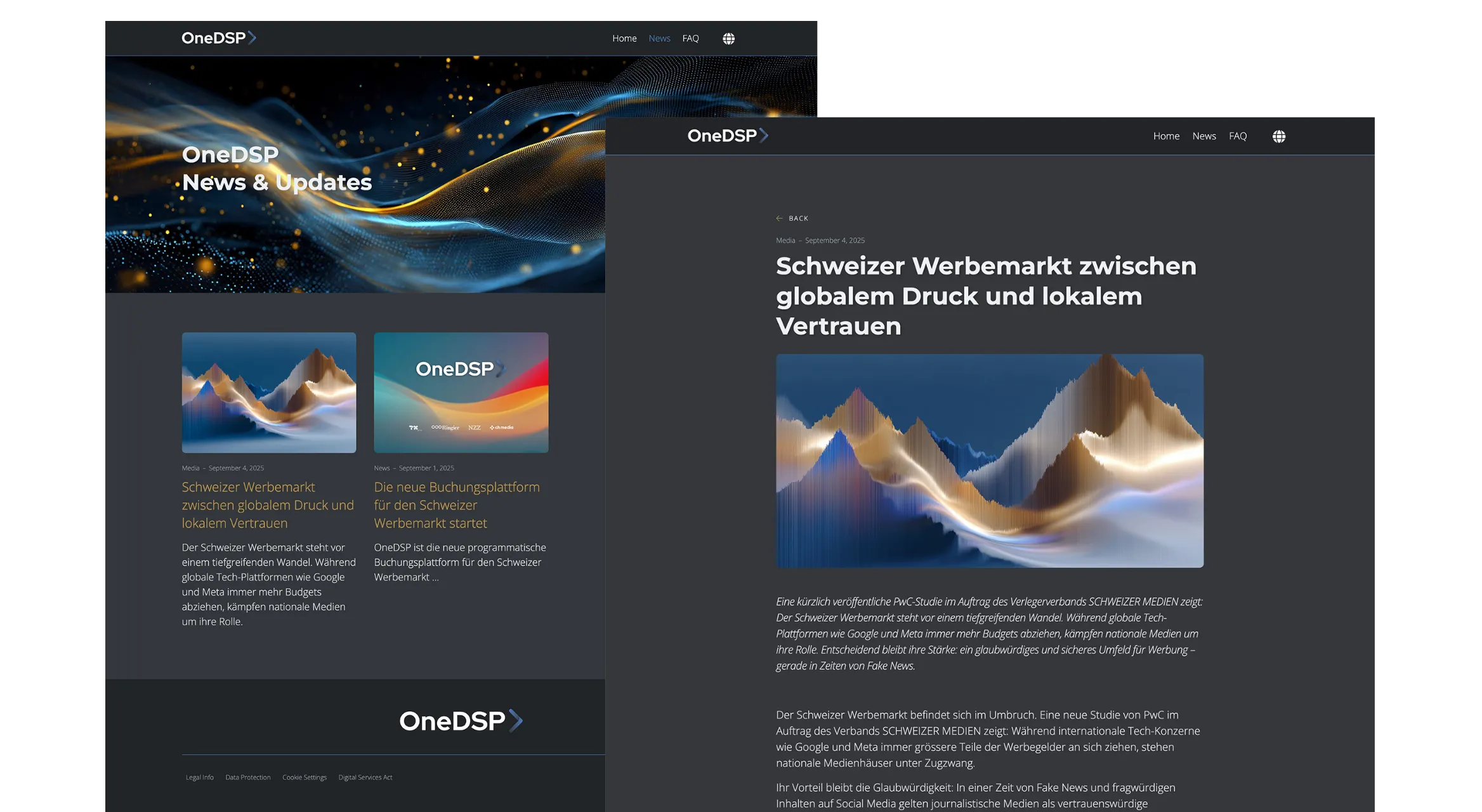
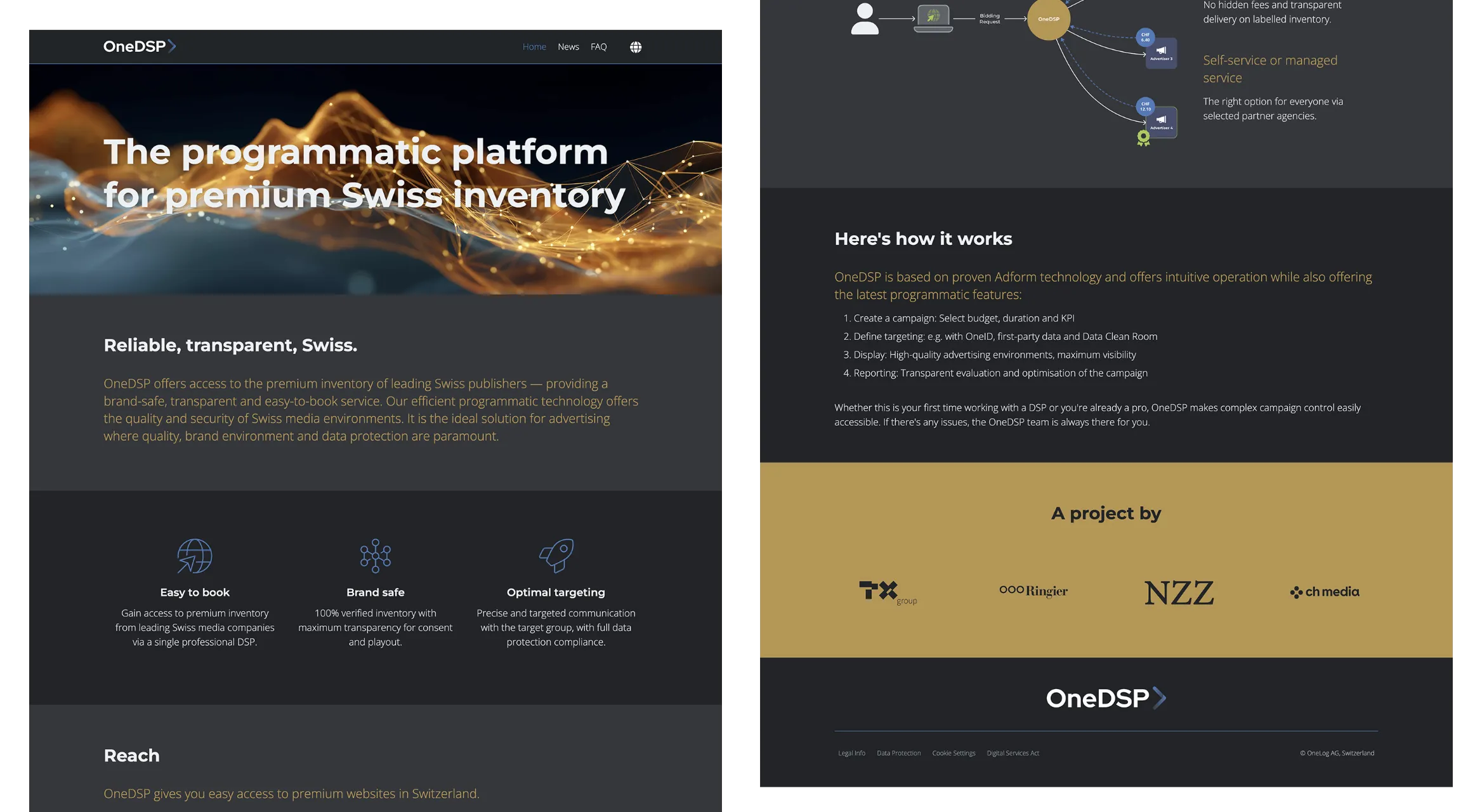
I designed and built the OneDSP website in Webflow. It follows the same patterns for content and UI as the OneID and OneLog sites, with its own colours and imagery to give it a separate identity. News and FAQ sections run on Webflow’s CMS, and all hero banners and article images were made with AI tools.

Enlarge image: The top and bottom of the dark OneDSP landing page side by side: a hero banner of flowing golden light headed “The programmatic platform for premium Swiss inventory”, three feature icons, a “Here’s how it works” list and a gold band with the publisher logos.
OneDSP: landing page.
Enlarge image: The OneDSP news overview with a “News & Updates” hero and article cards, next to an article page with a German headline about the Swiss advertising market and an AI-generated mountain image.
OneDSP: news overview and article.

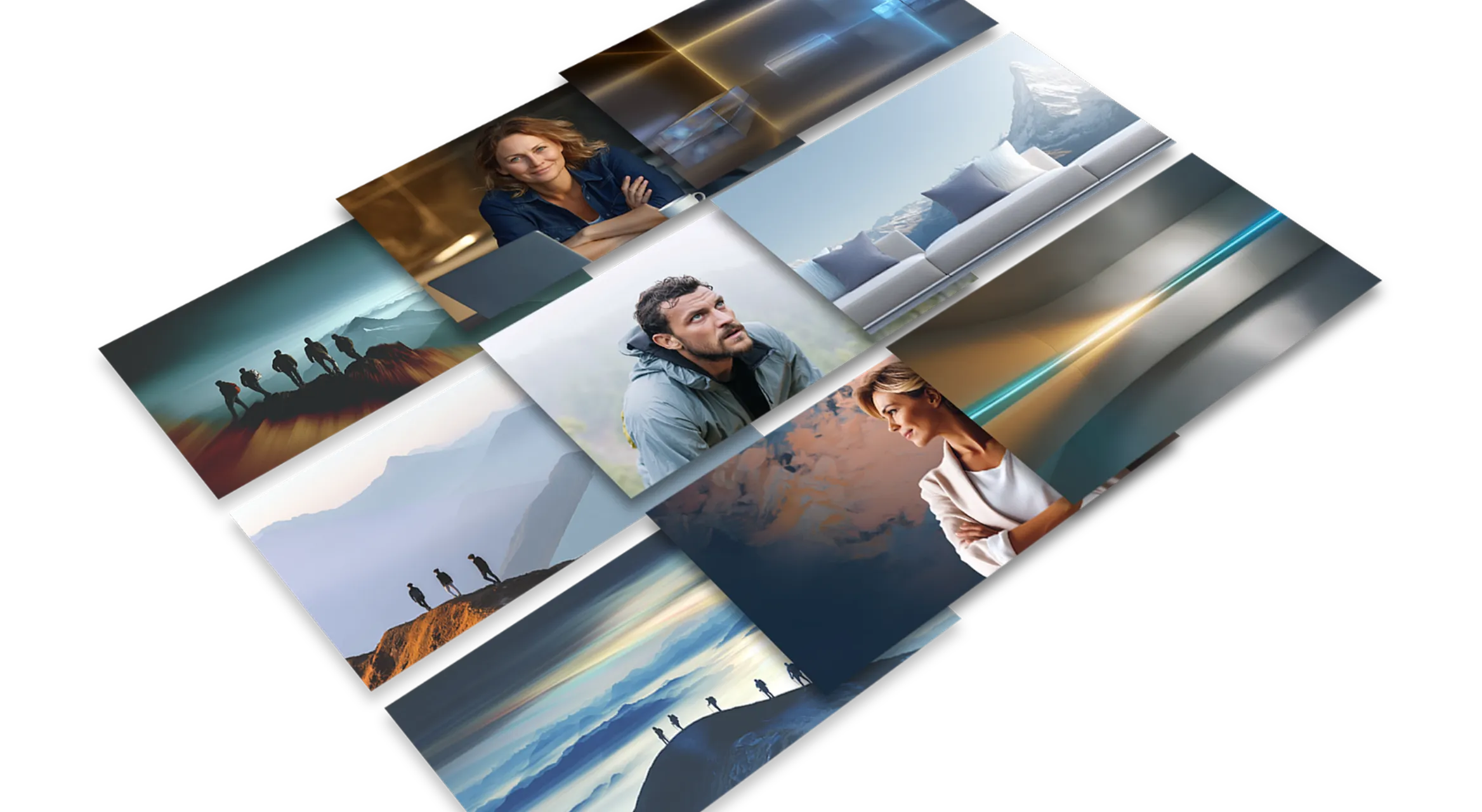
Generative AI as a design tool.

To add a more human touch to tech-heavy presentations, I used generative AI to create the visuals. It let me quickly make images tailored to each topic – from realistic people in different situations, often the same character across several slides, to abstract metaphors. It sped up production and opened new ways of visualising ideas.

Enlarge image: A tilted grid of AI-generated images: business people at work, a man in a rain jacket, a sofa with a mountain view, groups of hikers on misty ridges and abstract streaks of blue and golden light.
AI-generated visuals for the OneDSP website and presentation deck.

OneID came first.

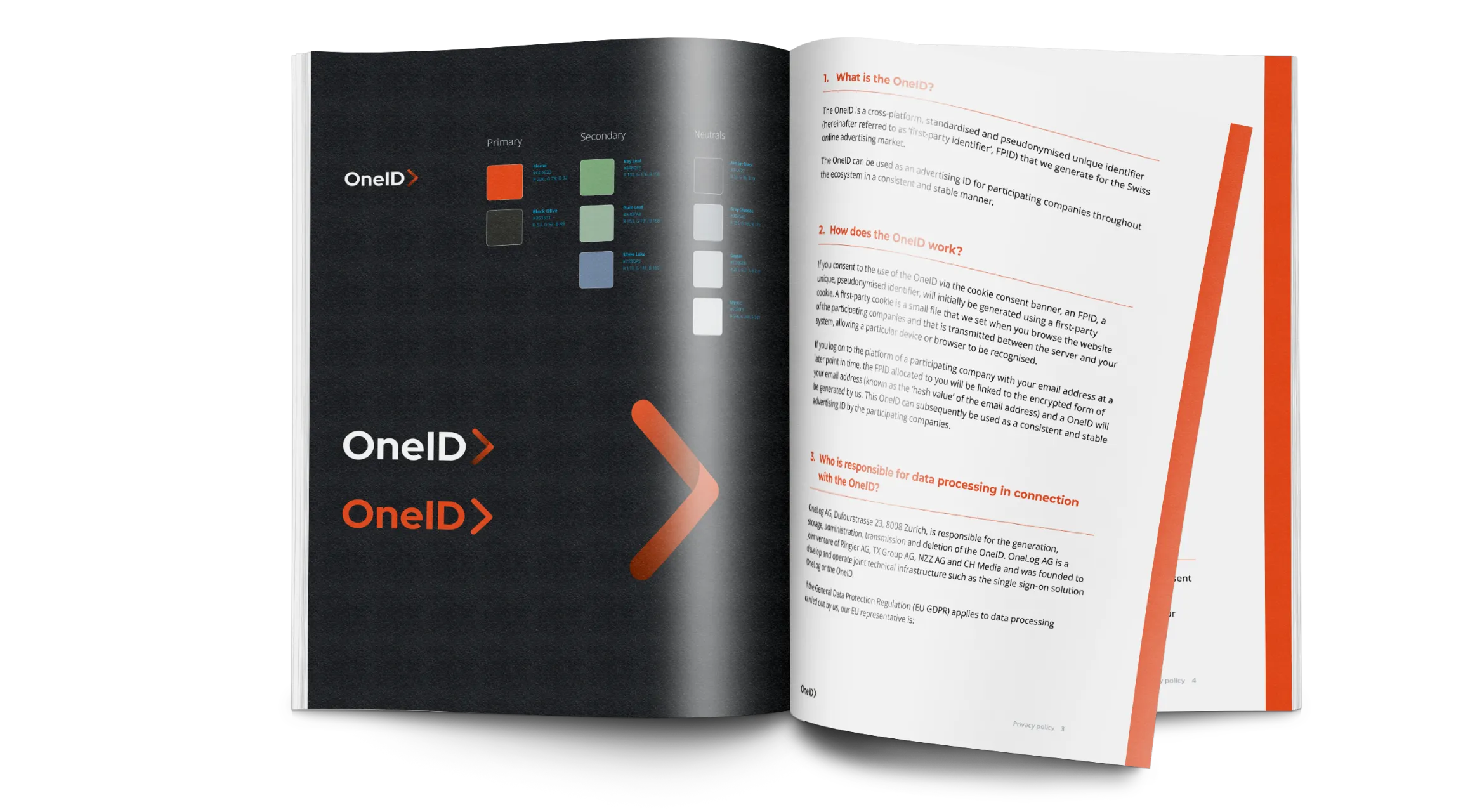
OneID, a year earlier, was the very first of these products, and it set the pattern OneDSP later followed: a new logo, colour palette and templates for documents and presentations.

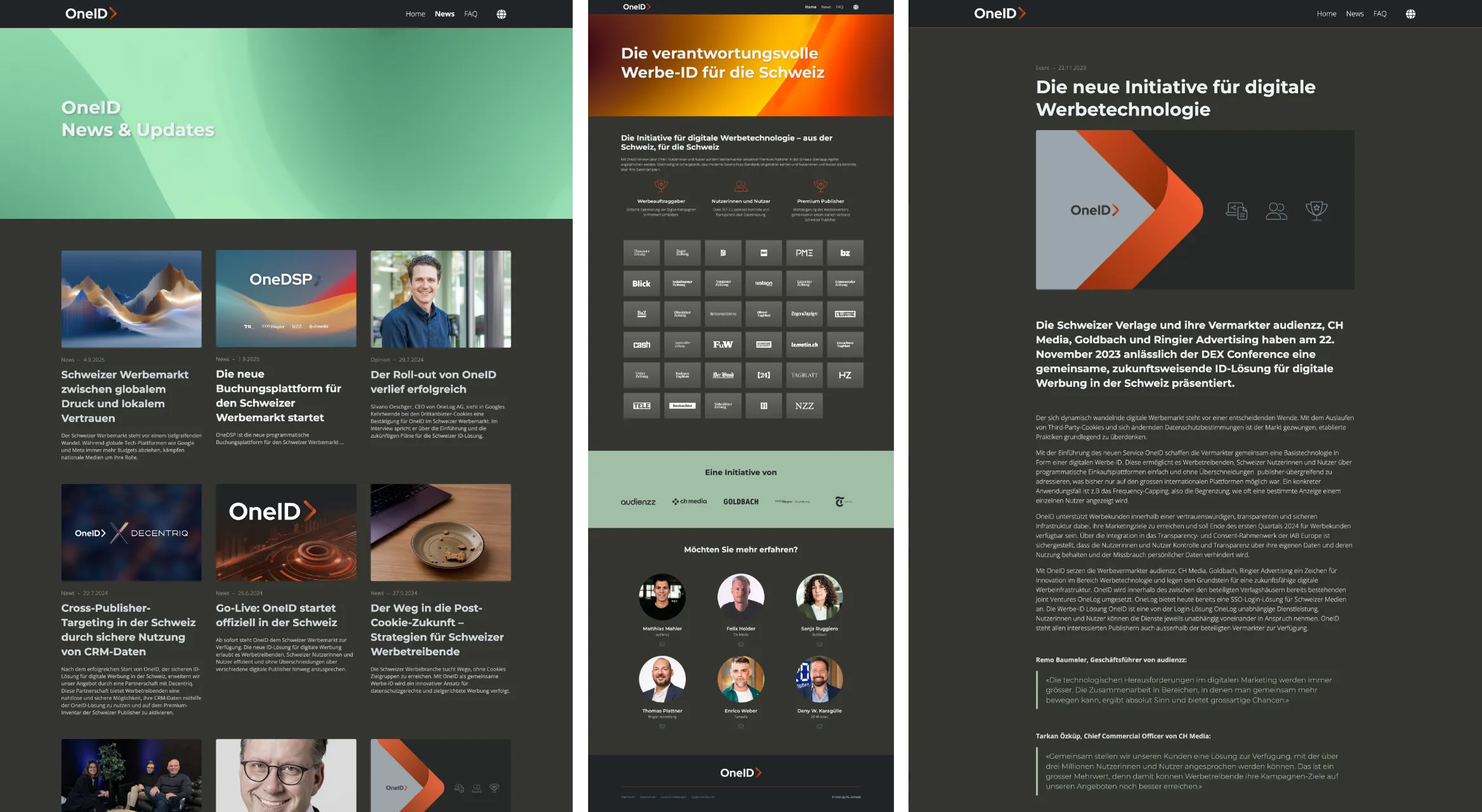
Its Webflow website kept the structure and UI of the OneLog site for a sense of familiarity, while its own colour scheme and imagery gave it its own identity. It also had News and FAQ sections on Webflow’s CMS. The hero banners and news images were my first, rather subtle use of generative AI.

Enlarge image: An open OneID brand guide: a dark page with the logo in white and orange and the primary, secondary and neutral colour swatches, next to a white text page with orange headings and an orange edge.
OneID brand guides and document templates.
Enlarge image: Three OneID website pages side by side: the news overview under a mint green banner, the landing page with an orange hero, a grid of publisher logos and contact portraits, and a news article.
OneID: news, landing page, article.

Result

Two products, ready for market.

Both products launched with their own brand, website and templates, and the sales team could keep news and FAQs up to date themselves through the CMS.

Looking back

What I’d do differently.

After investigating a few different options for the websites and settling on Webflow, we still came across some limitations in the CMS that made it hard to keep the sites consistent and scalable. Some options we felt should be standard features only came at an extra cost. We should have spent more time upfront defining technical requirements for the CMS and site management.

Contact

Let’s make it simple.

Open to freelance projects, full-time roles, and interesting conversations.

Visit me on LinkedIn