All work

4 min read

TVSquared · 2017–20

Their brand, our platform – in two hours.

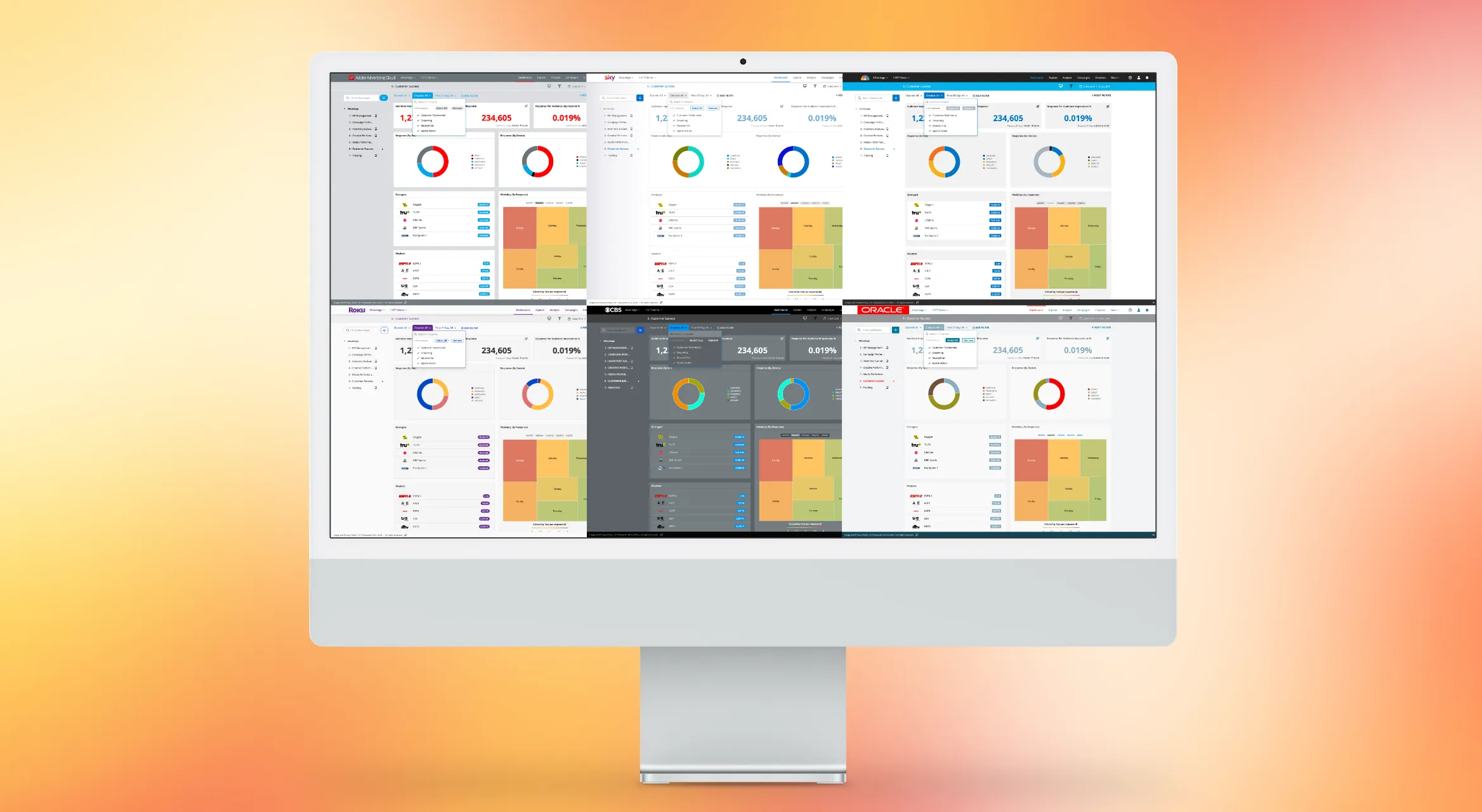
White-labelled versions of TVSquared ADvantage for clients such as NBCUniversal, Comcast, Sky, CBS and Univision – designed and built by me, on a system that made each one a matter of hours.

Enlarge image: Six desktop monitors showing the same ADvantage dashboard, each branded for a different client: Adobe Advertising Cloud, CBS, Roku, Oracle, Sky and NBC.
One dashboard, many brands.

At a glance

White-labelling started as one client’s request and became something Sales used in live demos. The clients were some of the largest media companies in the world, and their brand sat on our product. I cleaned up the front-end styles, built the system that made each white-label repeatable, and later used the same foundation for a Theme Configurator that let smaller clients brand the platform themselves.

Client
TVSquared
Industry
TV and streaming ad analytics
My role
Product Designer and front-end developer
Duration
2017–20
Platform
Web (SaaS)
Tools
Adobe XD, zeroheight, LESS, HTML/JS
Deliverables
White-label portals, design system, component library, Theme Configurator

Impact

  • 2 h

    to design, build and test one white-label

  • 0

    engineers needed to ship a new white-label

The challenge

Few users. Global brands.

ADvantage was never a product for the public. Only a handful of people at each client used it – but those clients were NBCUniversal, Comcast, Sky, CBS and Univision. Their own brand sat on a platform they hadn’t built, with a lot of money behind it.

The first white-labels took about two days each, and every one started from scratch. I pulled colours, fonts and logos from the client’s website and worked them into the product by hand.

Approach

Making a white-label routine.

Untangling the stylesheets.

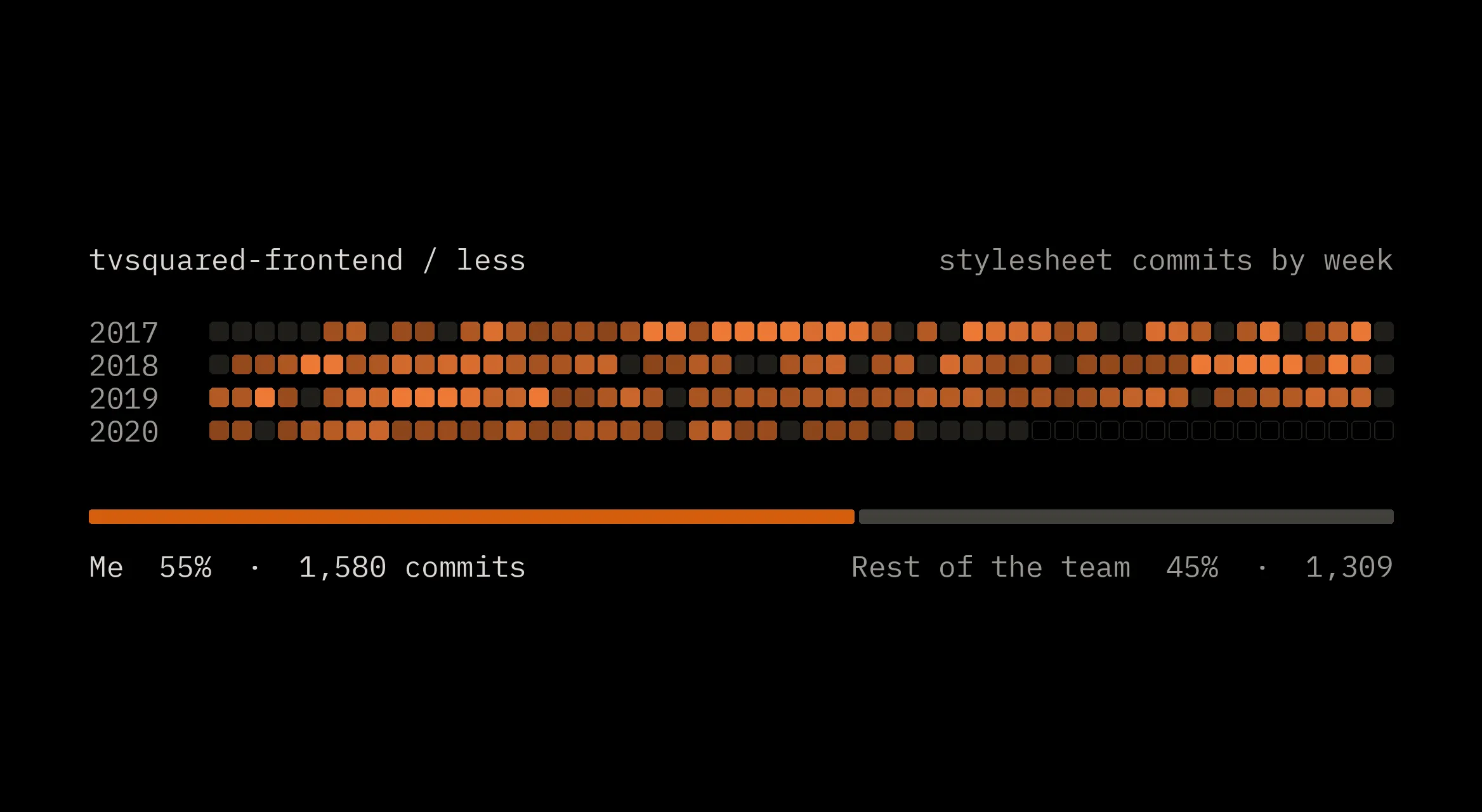
Dozens of LESS stylesheets cleaned up and restructured, variables renamed and consolidated, colours streamlined, and a dedicated space in the local front-end environment for testing changes. Between 2017 and 2020, more than half of all stylesheet changes in the front-end were mine.
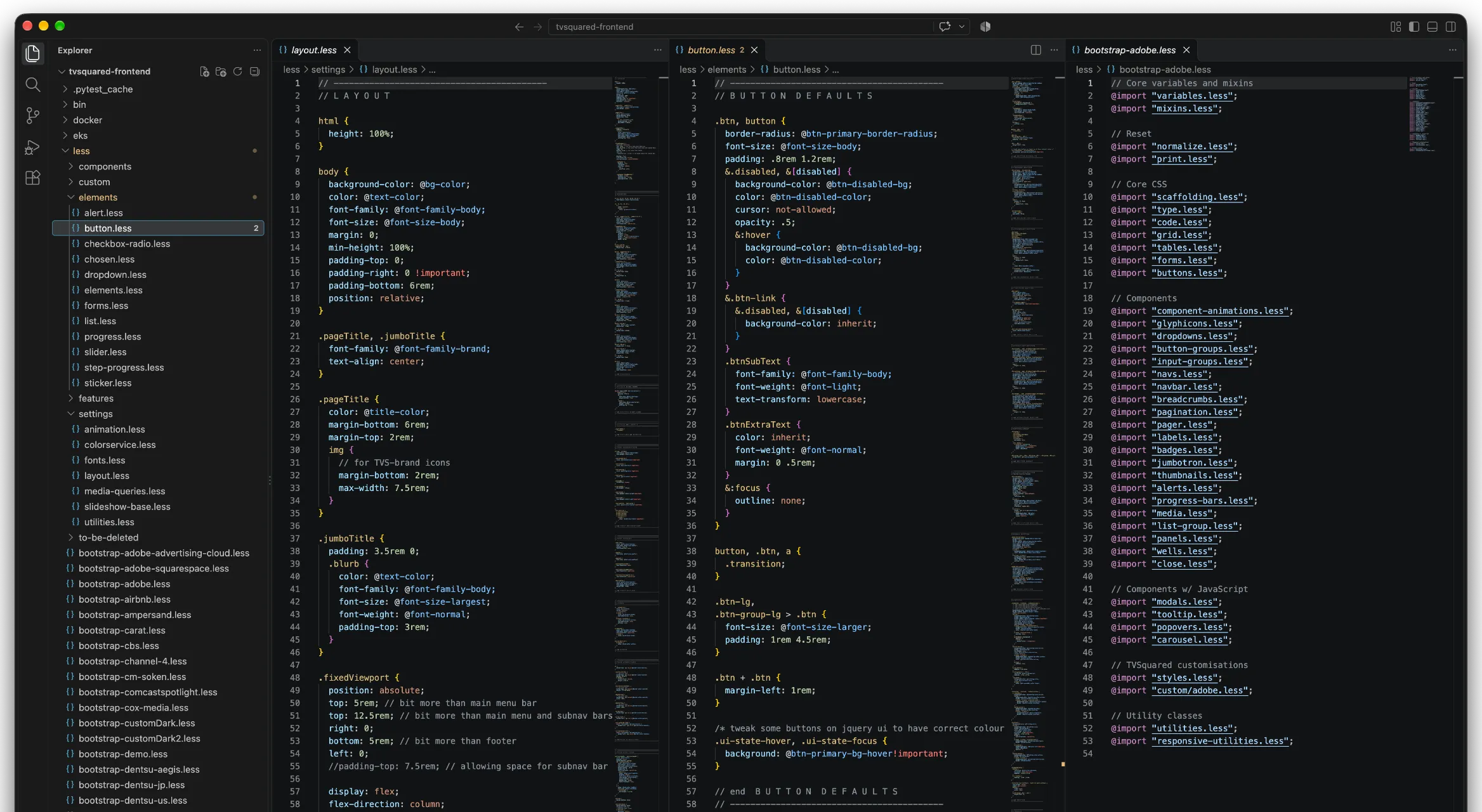
Enlarge image: A code editor showing the tvsquared-frontend repository: the LESS folder split into settings and elements, a button stylesheet built on shared variables, and a short entry file for one client that imports them all.
Shared settings and elements, and one short entry file per client.
Enlarge image: A grid of weekly squares from 2017 to mid-2020, almost all of them orange, showing my stylesheet commits each week. A bar below splits all stylesheet commits 55% mine and 45% the rest of the team.
My stylesheet commits by week, 2017–20.

One source of truth for a growing team.

As more designers joined, an Adobe XD master file held the colours, type styles and UI elements in all states, and every new project started from a linked template. Developers found the same specs in zeroheight, and with the front-end team I set up a component library in the development environment, so design and code stayed in sync.

A Theme Configurator for smaller clients.

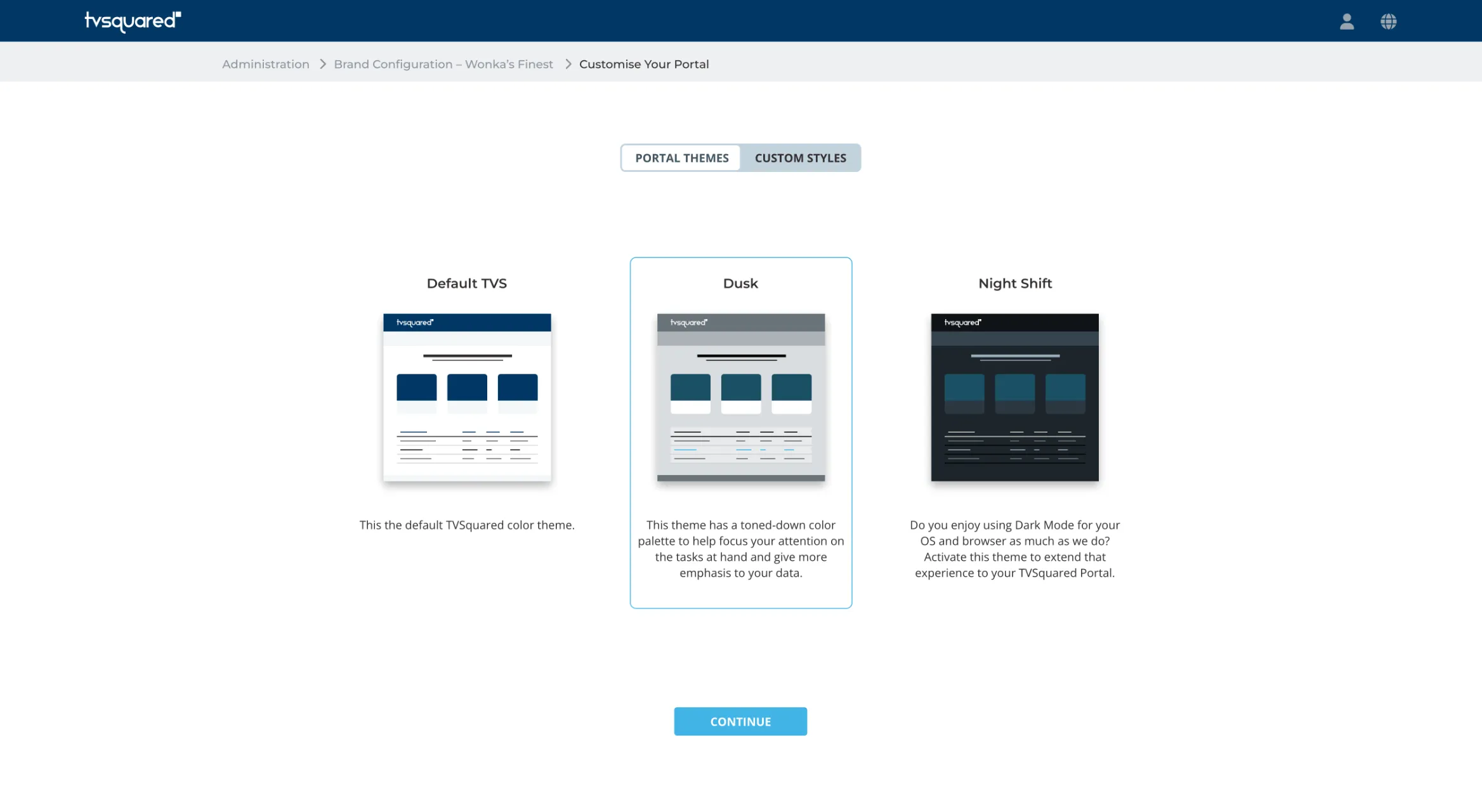
Later, as part of a wider push towards self-service, the same foundation let smaller clients brand the platform themselves. Not every client had the budget for a full white-label, so the Theme Configurator offered a fixed set of design options they could set up on their own.

Enlarge image: The Customise Your Portal screen in TVSquared’s admin area, with three ready-made themes to choose from: Default TVS, Dusk and Night Shift. A switch at the top leads to custom styles.
Smaller clients picked a ready-made theme, or switched to custom styles.
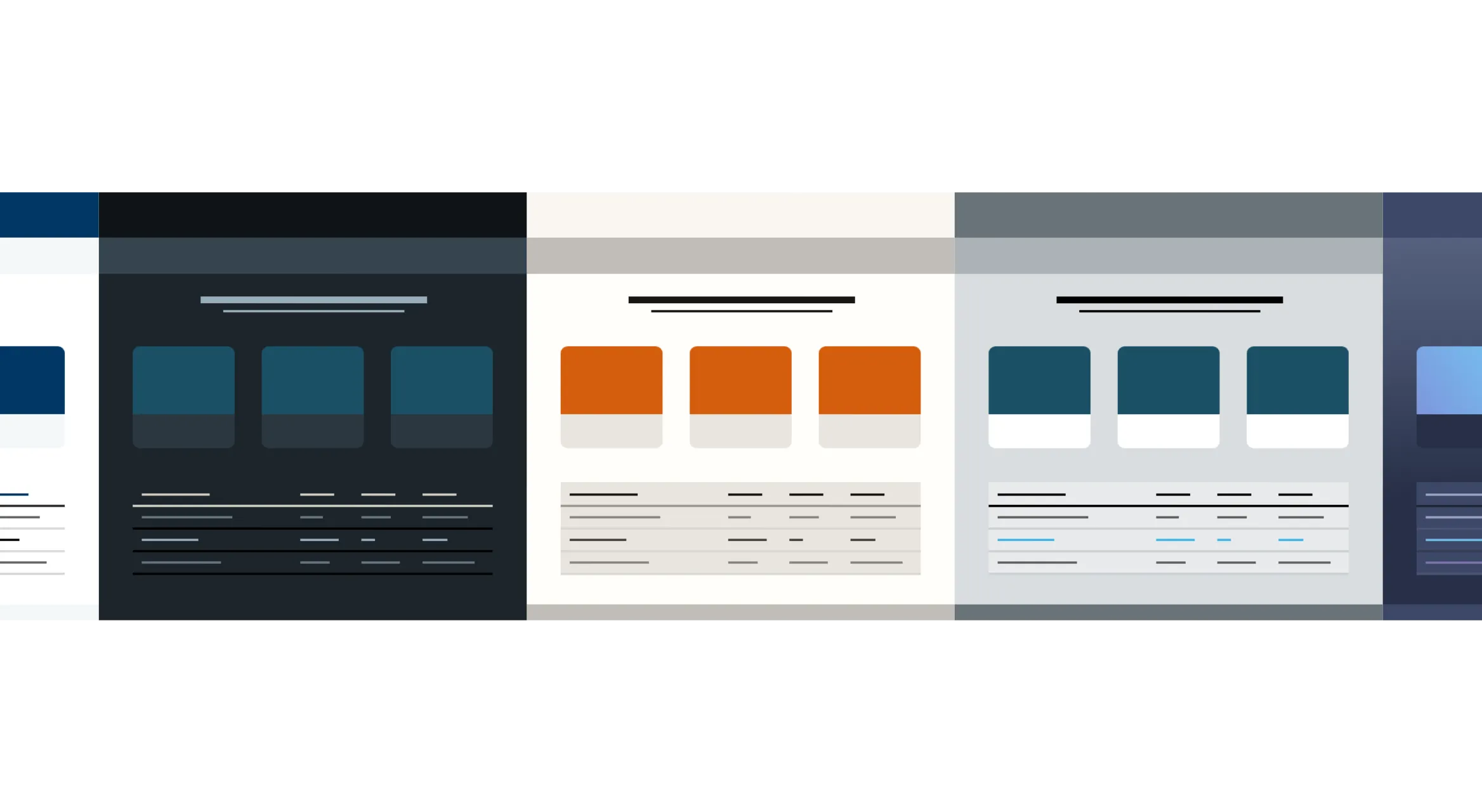
Enlarge image: A row of five simplified portal previews in different themes: navy, dark, warm white with orange, grey and indigo.
Prefab themes, built on the same variables as the full white-labels.

The pages everyone forgets about.

Error pages and the emails our system sent were redesigned to match the app. I restructured their markup and rewrote the styles, so they picked up each client’s theme and were ready for translation.

Result

Two hours, no engineers.

Once the system was in place, a new white-label started with a short table of values – colours, fonts, logos – that Sales or I shared with a contact at the client. Their website or style guide stayed the source of truth. I set up the client’s template with its variables in XD, updated a single stylesheet, and a code switch let our testers check the new theme before it went live.

Most white-labels took about two hours instead of two days, with no engineers involved. Over my time at TVSquared I created about 50 portal designs – most went live, and some were built for Sales to use in demos.

Looking back

What I’d do differently.

I’d push harder to build the system sooner. It meant a real upfront cost – my time and probably one developer’s – but it paid for itself quickly.

Contact

Let’s make it simple.

Open to freelance projects, full-time roles, and interesting conversations.

Visit me on LinkedIn